
Key takeaways
- 1Most neck pain from sleeping wrong is a muscle and joint strain that eases within a few days with gentle movement and heat or ice.
- 2Back and side sleeping are the best sleeping positions for neck pain, as long as your pillow keeps your head level with the rest of your spine.
- 3Pillow height should match your position: thinner for back sleepers, thicker for side sleepers.
- 4Pain that spreads down an arm, brings numbness or weakness, or keeps coming back is more than a simple crick and should be evaluated.
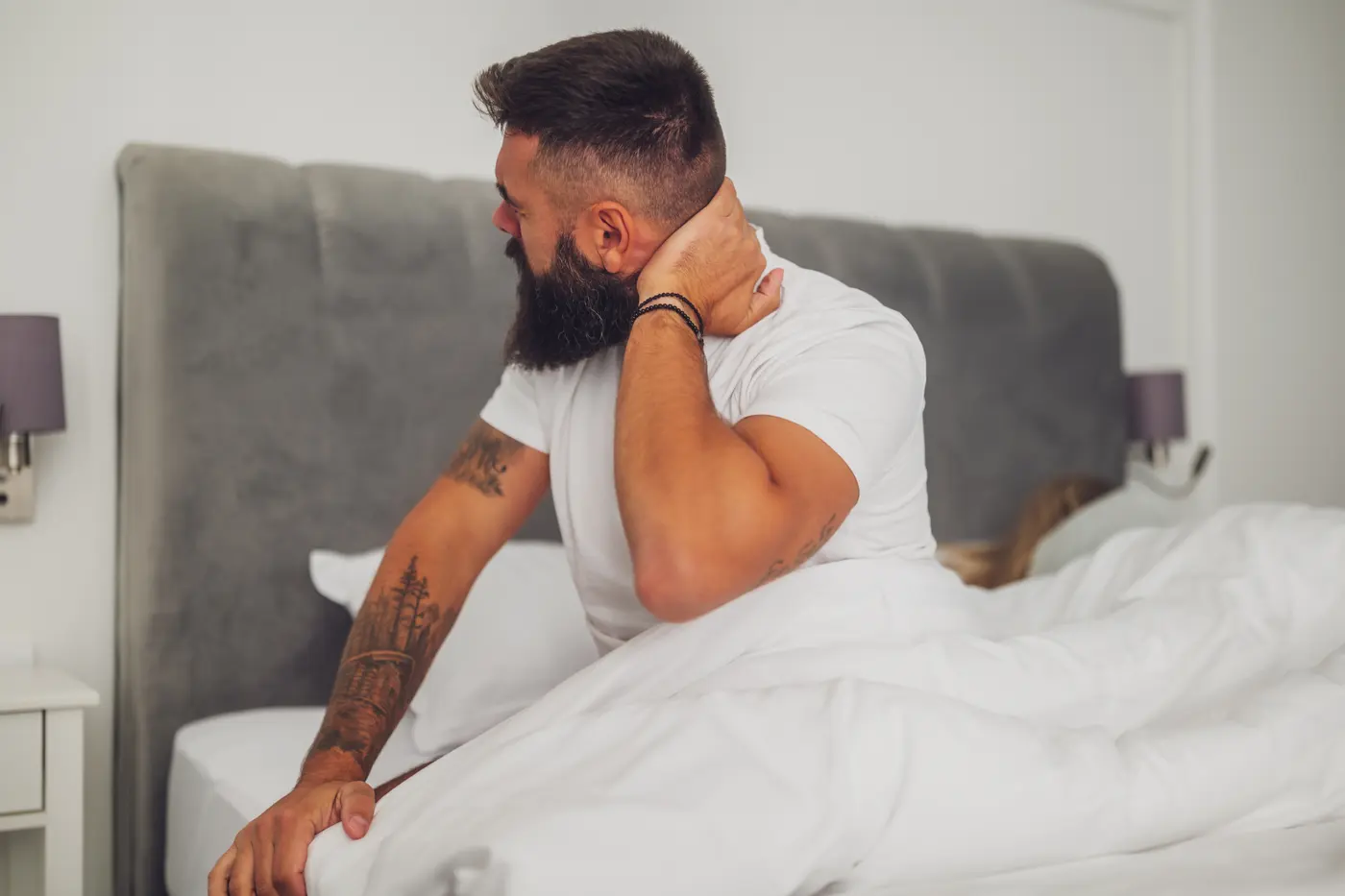
You went to bed fine and woke up unable to turn your head. Maybe you slept on the couch, or in a hotel bed, or with your head propped on the armrest. Whatever the cause, neck pain from sleeping wrong is one of the most common complaints we see, and in most cases it settles down quickly with the right steps.
Here’s what to do today, how to set up your sleep so it doesn’t happen again, and how to tell when it’s more than a simple crick.
Why you can wake up with a stiff neck
Your neck is built for movement. Seven small vertebrae, the joints between them and the muscles around them let you look up, down and over your shoulder. During sleep you can’t feel when a position is straining something, so you may hold your neck bent or twisted for hours.
When that happens, the small joints at the back of the neck and the muscles around them can get irritated. The muscles respond by tightening up to protect the area, which is the stiffness and guarding you feel in the morning. It often hurts most on one side and when you try to turn toward it.
A few common culprits:
- A pillow that’s too high, too flat or too old to hold its shape.
- Sleeping on your stomach with your head turned to one side.
- Falling asleep sitting up, on a couch, in a car or on a plane.
- A neck that was already tight from a long day at a screen.
Same-day relief: what to do this morning
The instinct is to hold your neck perfectly still. Gentle movement usually helps more than rest. Try this:
- Move within comfort. Slowly turn your head side to side, tip your ear toward each shoulder, and look up and down. Go only as far as is comfortable, a few times each, several times a day.
- Use heat or ice. A warm shower or heating pad can loosen tight muscles. An ice pack can calm a sharp, irritated spot. Use either for about 15 to 20 minutes with a cloth between it and your skin.
- Roll your shoulders. Gentle shoulder rolls and shoulder blade squeezes ease the upper back muscles that pull on the neck.
- Take breaks from screens. Looking down at a phone or laptop all day keeps loading the same irritated tissues.
- Consider over-the-counter pain relief if it’s appropriate for you. Check with your doctor or pharmacist if you aren’t sure.
What to avoid today
Skip cracking or forcefully stretching your own neck, heavy lifting, and long stretches of looking down. Be careful driving if you can’t comfortably check your blind spot. For most people, the neck starts to loosen within a day or two.
The best sleeping position for neck pain
The goal is simple: keep your head level with the rest of your spine all night, without it tipping forward, back or to the side.
On your back
Back sleeping is often the easiest on the neck. Use a fairly thin pillow that supports the curve of your neck without pushing your chin toward your chest. Some people like a small roll under the neck, or a contoured pillow that’s lower in the middle. A pillow under your knees helps your lower back too.
On your side
Side sleeping works well when the pillow fills the gap between your shoulder and your ear. Too thin and your head drops toward the mattress. Too thick and it tilts up toward the ceiling. Hugging a pillow in front of you can keep you from rolling onto your stomach.
On your stomach
Stomach sleeping keeps your head turned to one side for hours, which is a common reason people wake up with a one-sided stiff neck. If you can’t sleep any other way, use a very thin pillow or none, and try to shift gradually toward side sleeping.
Getting your pillow height right
There’s no single best pillow. The right one is the height that keeps your neck straight in the position you actually sleep in. A quick check: lie down in your usual position and have someone look at you from behind or from the side. Your nose should line up with the center of your chest, and your head shouldn’t tip up or down.
- Back sleepers usually do best with a lower pillow.
- Side sleepers usually need a higher, firmer pillow, especially with broad shoulders.
- Combination sleepers may like a pillow with a lower center and higher sides.
- Replace it when it no longer springs back or you have to fold it in half to get enough height.
When it’s more than a crick in the neck
Most morning neck stiffness is a short-lived strain. Some signs suggest something else is going on and deserve an evaluation:
- Pain, tingling or numbness that travels into your shoulder blade, arm or hand. That can point to an irritated nerve root, which we cover in our article on a pinched nerve in the neck.
- Weakness or clumsiness in an arm or hand.
- Headaches that start at the base of the skull and wrap forward, which may be cervicogenic headaches coming from the neck itself.
- Pain that isn’t improving after about a week, or that keeps coming back every few weeks.
- Stiffness that started after a car accident, fall or sports injury, even a minor one.
How we help at our Alexandria office
When you come in with neck pain, we start by listening. Then we examine how your neck moves, check reflexes, strength and sensation, and look at posture. Nothing is done without your consent, and X-rays are only taken if your situation calls for them.
If chiropractic care is a good fit, treatment may include gentle adjustments to restore movement, soft tissue work for tight muscles, and simple stretches and exercises you can do at home. We’ll also look at the everyday habits feeding the problem, like pillow height, desk setup and tech neck from hours on a phone. You can learn more on our services page.
A stiff neck after a bad night is usually just that, and it fades. If yours keeps coming back, it’s worth finding out why. This article is for general education and isn’t a diagnosis. If you’re in pain, get evaluated.
Frequently asked questions
How long does neck pain from sleeping wrong last?
A typical stiff neck from an awkward sleep position starts to ease within a day or two and is usually much better within a week. If it isn’t improving after several days, keeps returning, or comes with arm symptoms, get it checked.
What is the best sleeping position for neck pain?
On your back or on your side, with a pillow that keeps your head in line with your spine. Stomach sleeping is the hardest position on the neck because your head stays turned to one side all night.
Should I use heat or ice for a stiff neck?
Either can help, and personal preference is a fair guide. Many people find heat loosens tight muscles, while ice can calm a sharp, irritated area. Use either for about 15 to 20 minutes at a time with a cloth layer between it and your skin.
Can a chiropractor fix a crick in the neck?
Many people with a stiff neck feel better after gentle adjustments and soft tissue work, and we’ll also look at why it keeps happening, like pillow height or desk setup. If the exam points to something that needs medical care instead, we’ll refer you.
Why do I keep waking up with neck pain?
Recurring morning neck pain often traces back to a pillow that’s too high, too low or worn out, stomach sleeping, or neck strain that builds during the day from screens and desk work. Sometimes it points to joint or disc irritation that’s worth evaluating.