
Key takeaways
- 1Sciatica is a set of symptoms caused by irritation of the nerve roots that form the sciatic nerve, so the real question is what is irritating them.
- 2A careful exam helps sort out whether a disc, narrowing of the spinal canal, joint irritation or muscle tension is the likely driver.
- 3Chiropractic care for sciatica usually combines gentle spinal adjustments or mobilization with specific exercises you do at home.
- 4Loss of bladder or bowel control, numbness in the groin or saddle area, or worsening leg weakness needs emergency care, not a chiropractic visit.
If pain is shooting from your lower back through your buttock and down the back of one leg, you’ve probably heard the word sciatica. It’s one of the most common reasons people search for a chiropractor, and one of the most misunderstood. Before anyone can help, it’s worth knowing what sciatica actually is, what tends to cause it, and what a good conservative care plan looks like.
Sciatica is a symptom, not a diagnosis
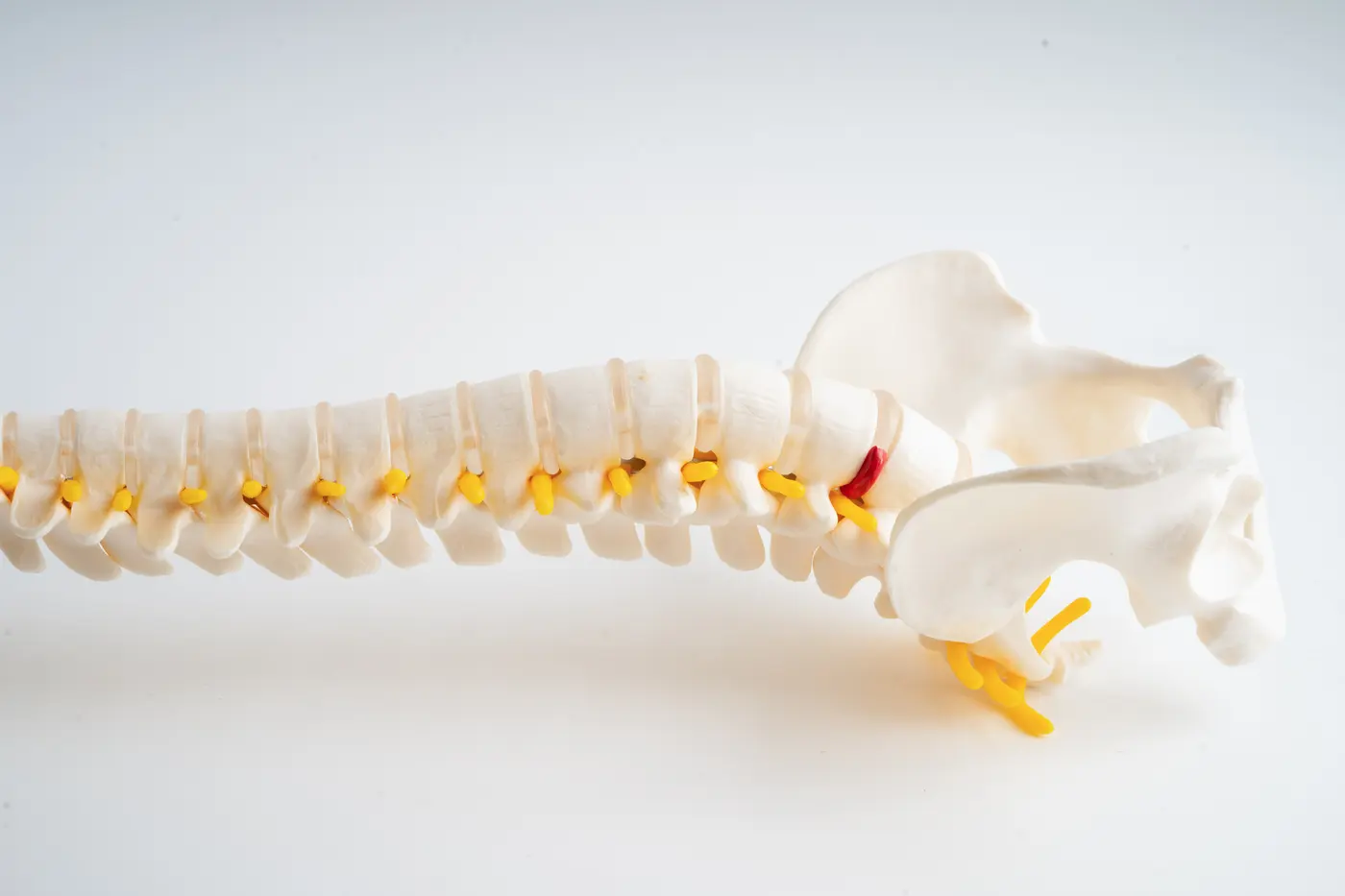
The sciatic nerve is the largest nerve in the body. It’s formed by several nerve roots that leave the lower spine and join together in the buttock before running down the back of the thigh and into the lower leg and foot. When one of those roots gets compressed or inflamed, you can feel it anywhere along that path.
That’s why “sciatica” describes a pattern of symptoms rather than a specific problem. It tells us a nerve is unhappy. It doesn’t tell us why. Typical symptoms include:
- Pain that travels from the low back or buttock down one leg, sometimes past the knee
- Burning, electric or sharp pain rather than a dull ache
- Numbness, tingling or pins and needles in the leg or foot
- Weakness when pushing off the toes or lifting the front of the foot
- Pain that changes with sitting, bending, coughing or sneezing
Common sources of sciatic pain
Several different problems can produce the same leg symptoms. Sorting them out matters because the best approach for one may be the wrong approach for another.
A bulging or herniated disc
This is one of the most frequent causes in younger and middle-aged adults. Disc material can press on or chemically irritate a nearby nerve root. Disc-related sciatica is often worse with sitting and bending forward. We cover this in more depth in our article on seeing a chiropractor for a herniated disc.
Spinal stenosis
In older adults, narrowing of the spinal canal or the openings where nerves exit can cause leg pain and heaviness that builds with standing and walking and eases when you sit or lean forward. Read more about lumbar spinal stenosis.
Joint and muscle sources
Irritated facet joints and sacroiliac joints can refer pain into the buttock and thigh, and tight or overworked muscles deep in the hip can add to the picture. These sources can mimic sciatica, though they usually don’t cause true numbness or weakness. A facet joint problem is a good example of “sciatica that isn’t.”
How we evaluate sciatica at our office
Your first visit starts with a conversation about when the pain started, what makes it better or worse, and how it’s affecting your work, sleep and activity. Then Dr. Shaan performs an exam that typically includes reflexes, muscle strength, sensation, flexibility and orthopedic tests that put gentle tension on the nerve. Nothing is done without your consent.
X-rays are taken only when your history and exam call for them. If the findings suggest you need advanced imaging such as an MRI, or a medical or surgical opinion, we tell you that directly and help coordinate the referral. Afterward, you get a clear report of findings covering how we can help, how often, and what it costs.
How chiropractic care may help sciatica
When the exam points to a mechanical problem in the lower back or pelvis, a chiropractor for sciatica typically focuses on reducing nerve irritation, restoring normal movement and building tolerance so the problem is less likely to return. Care at our office usually follows three phases: relief care, corrective care, and wellness care once you’re feeling better.
Adjustments and gentle mobilization
Spinal adjustments and mobilization aim to improve how the joints of the lower back and pelvis move. For an irritated nerve, gentler techniques are often the starting point. The goal is to calm things down, not to force anything.
Corrective exercise
Exercise is where a lot of lasting progress happens. Early on, that may mean specific movements that ease leg symptoms and short, frequent walks. Later, it means strengthening the hips and trunk and improving how you bend and lift. Many of these “blueprint” exercises are done at home between visits.
Soft tissue work and lifestyle advice
Massage and soft tissue work can ease guarding in the low back, buttock and hamstrings. We also look at the daily habits that keep aggravating things, from long drives on I-95 to how you sit at your desk. Learn more about these options on our services page.
What you can do at home right now
- Keep moving gently. Short walks and frequent position changes usually beat lying in bed.
- Notice what centralizes the pain. If a position pulls symptoms out of your leg and back toward your spine, that’s generally a good sign. Positions that push pain further down the leg are ones to limit.
- Break up sitting. Stand and move every 20 to 30 minutes, especially during long commutes or desk days.
- Try ice or heat. Many people prefer ice early in a flare and heat later for muscle tension. Use whichever helps, for 15 to 20 minutes at a time.
- Avoid aggressive stretching. Yanking on a sore hamstring can irritate an already sensitive nerve.
One patient described the outcome that matters most to us better than we could:
“Dr. Shaan fixed a partially torn meniscus and a sciatic nerve inflammation due to the sport I practice. I highly recommend him!”
When chiropractic isn’t the right first stop
Honest care means knowing the limits. If you have any red-flag symptoms, the right move is emergency or urgent medical care. If your leg weakness is significant or progressing, a surgical opinion may be needed. And if you’ve had several weeks of appropriate conservative care without meaningful improvement, it’s time to reassess, which may include imaging, a referral to a pain specialist, or co-managing your care with your primary doctor.
How long does recovery usually take?
Many sciatica episodes improve over several weeks to a few months with conservative care. Leg pain often eases before numbness does, and strength sometimes returns last. Progress isn’t always a straight line, so we track specific markers such as how far into your leg the symptoms reach, how long you can sit, and how you score on strength and nerve tension tests.
If you’re dealing with sciatica in Franconia, Rose Hill, Hayfield or anywhere around Alexandria, you don’t have to guess at what’s going on. Contact our office to schedule an evaluation. This article is for general education and isn’t a diagnosis. If you’re in pain, get evaluated.
Frequently asked questions
Can a chiropractor help with sciatica?
Many patients with sciatica do well with conservative care that includes chiropractic adjustments or gentle mobilization, soft tissue work and targeted exercise. Results depend on what is causing the nerve irritation, which is why a thorough exam comes first. If your findings point to something that needs a medical specialist, we refer you.
Is it safe to get adjusted with sciatica?
For most people, yes, provided you’ve been properly examined and the techniques are matched to your condition. Not every sciatica patient needs a high-velocity adjustment. Gentler, low-force and non-thrust options exist, and we explain what we recommend and why before anything is done.
How long does sciatica take to go away?
Many episodes of sciatica improve over several weeks to a few months with conservative care. Some people recover faster, and some cases linger, especially when the underlying cause is long-standing. Steady progress matters more than the calendar, and stalled progress is a reason to reassess.
Should I rest in bed with sciatica?
Prolonged bed rest generally isn’t recommended. Staying gently active within your comfort level, such as short walks and position changes, tends to help more than lying down for days. Avoid positions that clearly send pain further down the leg.
When should I see a doctor instead of a chiropractor for sciatica?
Go to the emergency room for loss of bladder or bowel control, numbness in the groin or inner thighs, or rapidly worsening leg weakness. See a medical doctor promptly if sciatica comes with fever, unexplained weight loss, a history of cancer, or follows a serious fall or accident.