
Key takeaways
- 1Most upper back pain between the shoulder blades comes from strained muscles, sustained desk posture, stiff mid back joints or irritated rib joints.
- 2Pain in this area can also be referred from the neck, so a good exam looks above the shoulder blades too.
- 3Some serious non-spinal problems, including heart attack, aortic dissection and gallbladder disease, can cause pain between the shoulder blades and need emergency or medical care.
- 4Movement breaks, heat, screen setup and targeted exercises help many people, and persistent pain deserves a proper evaluation.
Pain between the shoulder blades has a way of nagging. It’s hard to reach, hard to stretch, and it often shows up at the end of a long workday or after a night of bad sleep. Many people describe it as a knot they can’t get out, or a burning spot right along the spine.
In most cases, upper back pain between the shoulder blades comes from muscles, posture or stiff joints. But this area is also a place where a few serious internal problems can show up, so it’s worth knowing both sides of the picture.
What’s actually between your shoulder blades
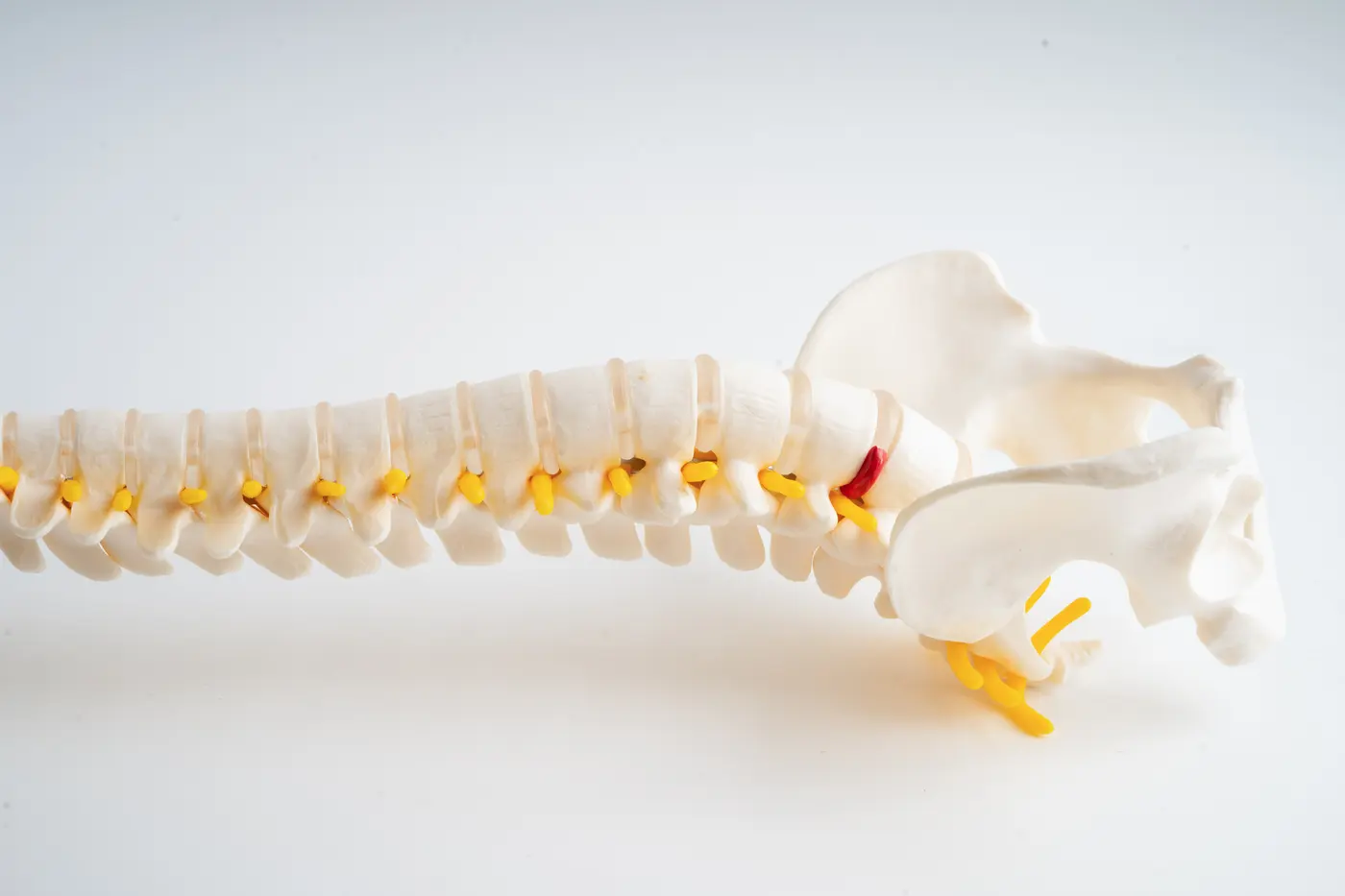
The region between your shoulder blades is the upper part of your thoracic spine, the twelve vertebrae of your mid back that also connect to your ribs. Layered over it are several muscles, including the rhomboids and the middle and lower trapezius, which hold your shoulder blades in place and pull them back.
Each rib also forms small joints with the spine. Those joints move every time you breathe, twist or reach, which is why some upper back pain gets sharper with a deep breath. When people search for “mid back pain,” this is usually the area they mean.
Common muscular and postural causes
Muscle strain and overuse
Lifting, carrying a child or heavy bags on one side, a new workout, painting a ceiling, or a weekend of yard work can all overload the muscles around the shoulder blades. Strains usually feel achy and tight, with tender spots you can press on.
Desk posture and long sitting
This is the cause we see most at our Alexandria office. When you sit for hours with your shoulders rounded and your head forward, the muscles between your shoulder blades are stretched and working constantly to hold you up. By late afternoon they ache. Long commutes on I-95 and the Beltway don’t help. If that sounds familiar, our article on tech neck covers the screen side of this problem.
Stiff mid back and rib joints
The joints of the thoracic spine and the rib joints next to them can get stiff and irritated. That often feels like a sharp, localized spot beside the spine that catches when you twist, take a deep breath or roll over in bed. It can be quite painful, even though it’s usually not dangerous.
Pain referred from the neck
Problems in the lower neck, such as an irritated disc or joint, can refer pain to the area around the shoulder blade. If your pain comes with neck stiffness, or tingling into your arm, the source may be higher up. Our article on a pinched nerve in the neck explains that pattern.
What you can do at home
For ordinary muscular and postural pain, a few simple steps go a long way:
- Keep moving. Gentle movement helps more than bed rest. Walk, roll your shoulders, and avoid sitting in one position for long periods.
- Use heat. A heating pad or warm shower for 15 to 20 minutes can relax tight muscles. Some people prefer ice for a sharp, fresh strain.
- Break up desk time. Stand up every 30 to 45 minutes. Raise your monitor so you aren’t looking down, and keep your keyboard close so your shoulders aren’t reaching forward.
- Check how you sleep. Stomach sleeping and a top shoulder rolled forward can both strain this area. Our guide to the best sleeping position for lower back pain has pillow setups that help the whole spine.
- Lighten the load. Switch shoulders with bags, or use a backpack with both straps.
Three easy moves
- Shoulder blade squeezes: draw your shoulder blades back and down, hold for 5 seconds, release. Repeat 10 times.
- Upper back extension: sitting in a firm chair, clasp your hands behind your head and gently arch back over the top of the chair. Hold a few seconds, repeat 5 to 8 times.
- Open book stretch: lie on your side with knees bent, arms straight in front of you. Slowly open your top arm across your body toward the floor behind you, following it with your eyes. Repeat 5 to 8 times each side.
These should feel like gentle stretching. Stop if any of them sharply increase your pain or cause tingling into your arm.
How we evaluate mid back pain
Because pain in this area can come from several places, the exam matters. At Franconia Chiropractic Center, a first visit starts with a conversation about your symptoms, health history and what makes the pain better or worse. Then we test how your neck, mid back and shoulders move, check reflexes, strength and sensation, and assess posture. X-rays are only taken when your condition calls for them. You can read the step-by-step on our new patients page.
If anything in your history or exam suggests the pain isn’t mechanical, such as a heart, lung or abdominal source, we’ll tell you directly and refer you to the right provider.
How chiropractic care can help
For pain from muscles, posture and stiff spinal or rib joints, many patients find a combined approach helpful:
- Adjustments to restore movement in stiff thoracic and rib joints.
- Soft tissue work and massage therapy to ease tight muscles around the shoulder blades.
- Corrective exercises to strengthen the muscles that hold your shoulders back, many of them done at home.
- Workstation and lifestyle advice, drawing on Dr. Shaan’s background as an ergonomic consultant.
You can see how these fit together on our services page.
When to see someone else first
If your pain started suddenly with no clear cause, feels different from any back pain you’ve had, or comes with any of the symptoms in the warning box above, see a medical doctor or go to the ER first. Chiropractic care can still be part of the plan once more serious causes have been ruled out.
Most pain between the shoulder blades is a sign that your upper back needs more movement, more strength and better breaks. This article is for general education and isn’t a diagnosis. If you’re in pain, get evaluated.
Frequently asked questions
What causes pain between the shoulder blades?
The most common causes are muscle strain, long hours of sitting with rounded shoulders, stiff joints in the mid back, irritated rib joints, and pain referred from the neck. Less commonly, heart, lung, gallbladder or aortic problems cause pain in this area, which is why new or unusual pain should be checked.
When should I worry about pain between my shoulder blades?
Seek emergency care if the pain is sudden and severe, feels like tearing, or comes with chest pressure, shortness of breath, sweating, nausea, or pain in your jaw or arm. Also get checked if it comes with fever, unexplained weight loss, or pain after eating.
Can sleeping wrong cause upper back pain?
Yes. Sleeping on your stomach, or on your side with your arm pulled under you or your top shoulder rolled forward, can strain the muscles and joints of the upper back. A pillow that keeps your neck level and a pillow to hug can help.
How do I relieve mid back pain fast?
Gentle movement, heat, and breaking up long stretches of sitting usually help most. Easy stretches like shoulder rolls and upper back extension over a chair can ease stiffness. If pain persists beyond a week or two, or keeps returning, get it evaluated.
Can a chiropractor help with pain between the shoulder blades?
For pain coming from muscles, posture and stiff spinal or rib joints, many patients find adjustments, soft tissue work and corrective exercises helpful. Part of our exam is making sure your pain isn’t coming from somewhere chiropractic care shouldn’t treat.