
Key takeaways
- 1Lumbar spinal stenosis is a narrowing of the spaces around the nerves in the lower back, and it most often develops gradually with age-related changes.
- 2The classic sign is leg pain, heaviness or tingling with standing and walking that eases when you sit or bend forward.
- 3Conservative treatment centers on flexion-based exercise, a structured walking plan, manual therapy and daily strategies that let you stay active.
- 4Stenosis care often works best when it’s co-managed with your primary care doctor and, when needed, a pain specialist or spine surgeon.
You set out for a walk around the neighborhood or down the aisles at the grocery store, and after a few minutes your legs start to ache, feel heavy or tingle. You sit down, or lean forward on a cart, and it fades. Then it starts again. That pattern is one of the most recognizable signs of lumbar spinal stenosis, and it’s something we see often in our Alexandria office. The good news is that many people with stenosis can stay active with the right conservative plan.
What lumbar spinal stenosis is
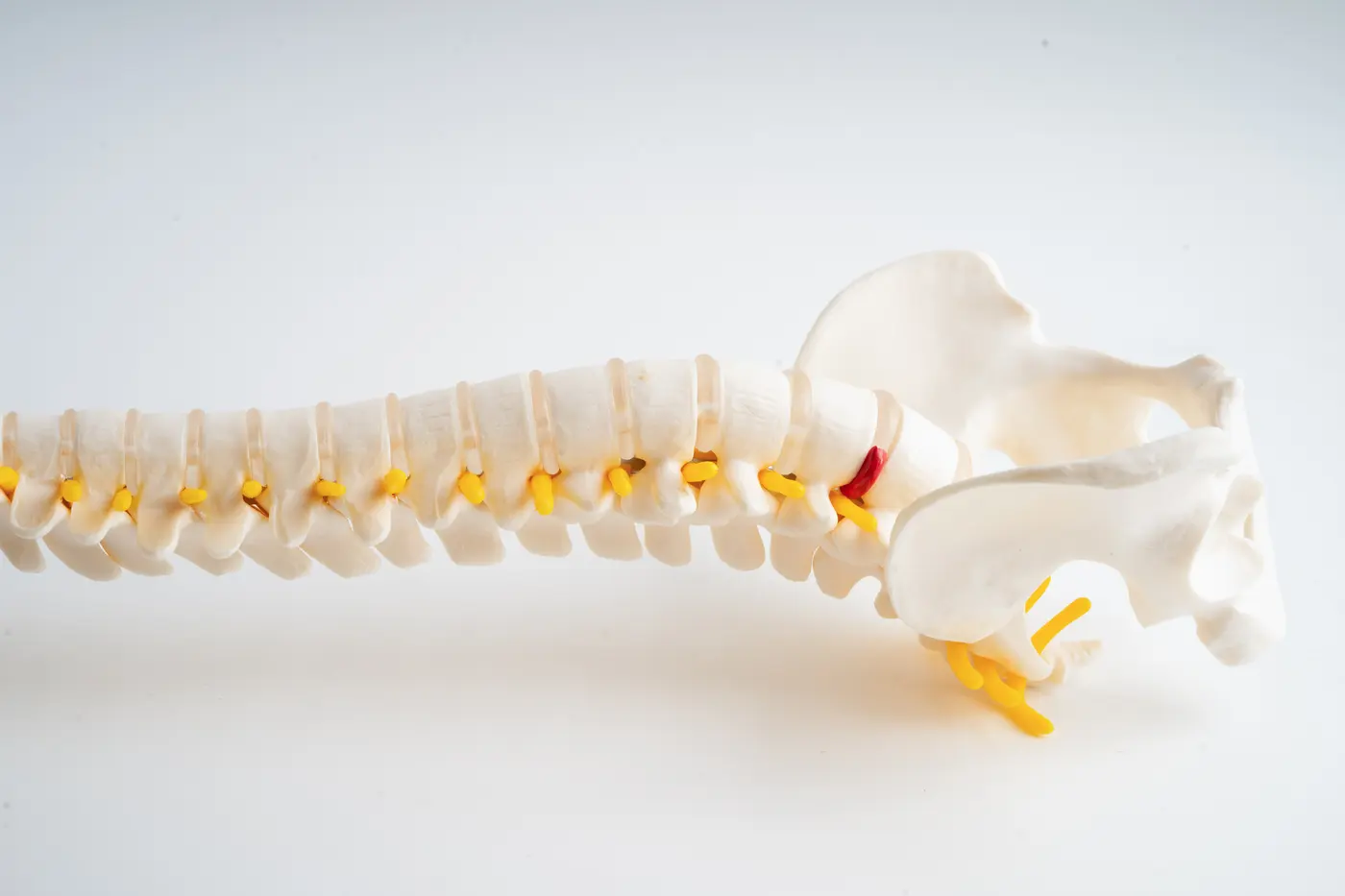
Stenosis means narrowing. In the lower back, it refers to a narrowing of the spinal canal or the openings where nerves exit the spine. Over years, discs lose height, facet joints enlarge with arthritis, and ligaments thicken. Together these changes can crowd the nerves. Narrowing in the central canal tends to affect both legs, while narrowing at a nerve’s exit point more often affects one side. A vertebra that has slipped slightly forward on the one below, called spondylolisthesis, can add to the crowding.
Stenosis is most common in adults over 50 and usually develops gradually. Plenty of people have narrowing on an MRI and no symptoms at all. Treatment is based on how you feel and function, not just on what the image shows.
Neurogenic claudication and the shopping cart sign
The hallmark symptom of lumbar stenosis is called neurogenic claudication. It means leg symptoms that are brought on by standing and walking and relieved by sitting or bending forward. Common features include:
- Aching, heaviness, cramping, numbness or tingling in the buttocks, thighs or legs
- Symptoms that build the longer you stand or walk
- Relief within minutes of sitting down or leaning forward
- Being able to walk farther while pushing a shopping cart, the so-called shopping cart sign
- Cycling or walking uphill feeling easier than walking downhill
Why does bending forward help? Leaning into flexion opens up the spinal canal slightly, giving the nerves more room. Standing upright and arching back does the opposite.
Not every leg pain with walking is stenosis
Poor circulation in the legs, called vascular claudication, can also cause leg pain with walking. A key difference is that vascular symptoms usually ease when you simply stop and stand still, while stenosis symptoms typically need sitting or bending forward. Hip arthritis and nerve conditions such as peripheral neuropathy can also look similar. Part of our exam is sorting these out, and referring to your physician when circulation or another medical issue is suspected.
Conservative lumbar spinal stenosis treatment
Conservative care aims to improve how far and how long you can walk and stand, reduce pain, and keep you doing what you enjoy. It doesn’t reverse the narrowing, but it can make a real difference in daily life.
Flexion-based exercise
Because bending forward tends to ease stenosis symptoms, exercise programs often emphasize gentle flexion. Examples include knee-to-chest stretches, pelvic tilts, seated forward bends and stationary cycling. Strengthening the hips and deep core muscles helps you hold positions that give your nerves more room. Many of these exercises are part of the home plan we build with each patient.
A structured walking plan
Walking still matters. The approach is to walk until symptoms begin, sit or lean forward briefly, then continue. Over weeks, many people can stretch out the distance between breaks. A rolling walker or cart is a perfectly reasonable tool for longer trips, not a sign of giving up.
Gentle manual therapy
Chiropractic care for stenosis tends to be gentle. Mobilization of the lower back and hips, flexion-based table techniques and soft tissue work can ease stiffness and help you move more comfortably. Forceful extension positions are generally avoided. You can see the full range of what we offer on our services page.
Balance, strength and overall conditioning
Stenosis can make people walk less, and walking less leads to weaker legs, poorer balance and a higher risk of falls. That cycle is worth breaking early. Simple balance drills, sit-to-stand practice from a chair, and regular low-impact cardio such as cycling or water exercise help you stay steady and confident. Keeping a healthy body weight also reduces the load your lower back carries every day. We fold these pieces into your plan gradually, at a pace your symptoms allow.
Everyday strategies that help
- Use a stool to rest one foot while standing at the sink or counter
- Choose a stationary bike or recumbent bike for cardio
- Sit to get dressed, and plan seated breaks during errands
- Sleep on your side with knees slightly bent, or on your back with a pillow under your knees
- Keep up regular activity, since deconditioning tends to make stenosis symptoms worse
Co-management: why stenosis care is a team effort
Stenosis often shows up alongside other health conditions, and the best results come from coordinated care. We regularly co-manage with primary care physicians, and refer to physiatrists, pain management specialists or spine surgeons when it makes sense. Medical options your doctors may discuss include medications and epidural steroid injections. When symptoms are severe and don’t respond to conservative care, decompression surgery is an option a surgeon may recommend.
For patients on Medicare, it helps to know that Medicare Part B covers manual manipulation of the spine to correct a subluxation when it’s medically necessary, but not other chiropractic services or X-rays ordered by a chiropractor. Our staff verify your benefits before care begins. Read more in does Medicare cover chiropractic?
Your first visit
We start by listening: how far you can walk, how long you can stand, and what you want to get back to. Dr. Shaan then examines your strength, reflexes, sensation, flexibility and posture, and checks your hips. X-rays are taken when your condition calls for them. Afterward, you’ll get a clear report of findings covering how we can help, how often, and what it costs. Our new patients page walks through every step.
Spinal stenosis doesn’t have to shrink your world. If you’re in Alexandria, Springfield, Lorton or nearby, contact our office to schedule an evaluation. This article is for general education and isn’t a diagnosis. If you’re in pain, get evaluated.
Frequently asked questions
Can a chiropractor help with spinal stenosis?
Chiropractic care can be part of a conservative plan for lumbar spinal stenosis, typically using gentle mobilization, flexion-based techniques and exercise to improve function and walking tolerance. It doesn’t widen the spinal canal. The goal is to reduce symptoms and help you stay active, often alongside care from your medical providers.
What is the shopping cart sign?
The shopping cart sign describes people with stenosis who can walk farther while leaning forward on a shopping cart. Bending forward opens up space around the nerves in the lower back, which often eases leg symptoms. It’s a useful clue, not a diagnosis on its own.
What exercises are good for lumbar spinal stenosis?
Flexion-based exercises, such as gentle knee-to-chest stretches, pelvic tilts and seated forward bends, often feel best. Stationary cycling is usually better tolerated than walking because you’re leaning slightly forward. Hip and core strengthening help too. Your plan should be matched to your exam.
Is walking good for spinal stenosis?
Walking is generally encouraged, but in a structured way. Walk until symptoms begin, rest by sitting or bending forward, then continue. Over time many people can gradually extend the distance between breaks. A walker or cart can help on longer outings.
When does spinal stenosis need surgery?
Surgery is usually considered when symptoms are severe and limiting despite good conservative care, when weakness is progressing, or in the rare case of bladder or bowel changes, which is an emergency. A spine surgeon weighs your imaging, symptoms and overall health to help you decide.