
Key takeaways
- 1Facet joints are small paired joints at the back of each spinal segment, and they can become irritated, stiff or arthritic in both the neck and lower back.
- 2Facet pain typically worsens with arching backward, twisting or looking over your shoulder, and it often refers into the buttock, thigh, shoulder or head.
- 3There’s no single test that confirms facet pain, so assessment relies on your history, a hands-on exam and ruling out other causes.
- 4Conservative care such as adjustments, mobilization, exercise and soft tissue work helps many people, with medical procedures available for persistent cases.
You reach back to grab something from the back seat, or tip your head back to look up, and a sharp, localized pain grabs one side of your spine. Or you wake up stiff and it takes half an hour to loosen up. Patterns like these often point to the facet joints. Facet joint pain is one of the most common sources of both neck and lower back pain, and understanding how it behaves makes it much easier to manage.
What the facet joints are
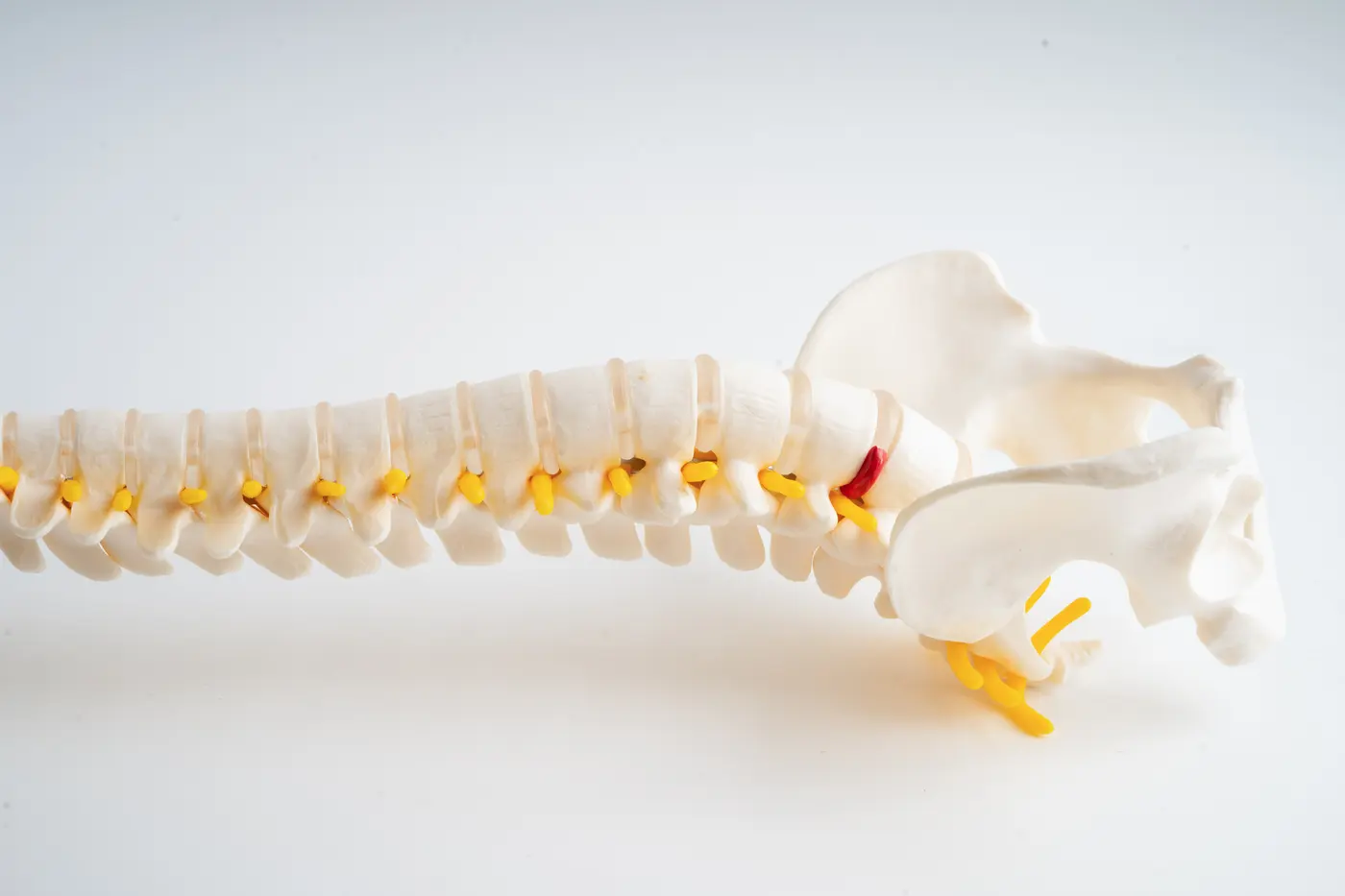
Each segment of your spine has three points of contact with the one below it: the disc in front and two small facet joints in back, one on each side. The facet joints guide and limit how your spine bends and twists. Like other joints in the body, they have cartilage, a joint capsule and fluid, and they have a rich nerve supply. That means they can become painful when they’re strained, inflamed, stiff or arthritic.
Facet joint pain is sometimes called facet syndrome, facet arthropathy or, when arthritis is present, facet arthritis. It becomes more common with age as discs lose height and more load shifts onto the facets, but it also shows up in younger people after a sudden twist, a fall, a sports strain or a car accident.
Common symptoms of facet joint pain
In the lower back
- Aching on one or both sides of the lower spine, often tender to the touch
- Sharper pain when you arch backward, twist or lean to one side
- Pain that can refer into the buttock, hip or back of the thigh, usually not below the knee
- Stiffness in the morning or after sitting or lying still
- Relief when you bend slightly forward or change positions
In the neck
- Pain on one side of the neck when you turn your head or look up
- Pain that can refer to the shoulder blade, upper back or the back of the head
- A feeling of being “locked” when checking blind spots while driving
- Headaches that start in the neck, which we discuss in our article on cervicogenic headache
Unlike nerve root problems, facet pain usually doesn’t cause true numbness, tingling or muscle weakness. If those symptoms are present, we look more closely at the discs and nerves. Our articles on pinched nerves in the neck and sciatica explain those patterns.
How facet joint pain is assessed
There’s no single exam maneuver or scan that confirms facet joint pain on its own. Instead, a careful evaluation pieces together several clues. At our Alexandria office, that usually includes:
- A detailed history of how the pain started, what movements trigger it and where it spreads
- Watching how you move, including extension, rotation and side bending
- Combined movement tests that load the facet joints, such as leaning back and rotating
- Feeling for tenderness and restricted motion over individual spinal segments
- Neurological checks of reflexes, strength and sensation to rule out nerve involvement
X-rays are taken when your condition calls for them. They can show facet arthritis, but arthritis is common and doesn’t always explain pain. That’s why imaging has to fit your exam. For persistent cases, pain management physicians sometimes use diagnostic nerve blocks to confirm whether the facet joints are the source.
Conservative care options
Adjustments and mobilization
Restricted, irritated facet joints often respond well to care that restores normal motion. Spinal adjustments and gentle mobilization aim to do exactly that. The specific technique depends on your exam, your comfort and how irritable the joint is. During a flare, gentler approaches usually come first.
Corrective exercise
Exercise helps protect the facets over time. For the lower back, that often means hip mobility, core endurance and learning to move through the hips instead of over-arching the spine. For the neck, it often means strengthening the deep neck flexors and upper back. These blueprint exercises are a regular part of the home plan we give each patient.
Soft tissue work and daily habits
Muscles around an irritated facet joint tend to guard and tighten. Massage and soft tissue work can ease that. We also look at triggers like overhead work, sleeping positions and long stretches at a screen. If your neck is involved, our article on tech neck has practical tips.
When we refer or co-manage
Many people with facet joint pain improve with conservative care. When pain persists despite a good trial, we refer to your primary care physician or a pain management specialist. Medical options they may discuss include anti-inflammatory medication, facet joint injections, and a procedure called radiofrequency ablation, which targets the small nerves that carry pain signals from the joint. We’re happy to coordinate care so everyone is working from the same plan.
Living well with facet joints
Facet arthritis doesn’t disappear, but it doesn’t have to run your life either. Staying active, keeping the hips and upper back mobile, breaking up long periods of sitting, and getting care early when a flare starts all help. Many patients use wellness care to stay ahead of flare-ups once they’re feeling better.
What to do during a flare
- Ease off the movements that clearly provoke it, such as arching back, overhead reaching or twisting under load, for a few days
- Keep moving in comfortable ranges; gentle walking usually helps more than resting
- Try ice or heat for 15 to 20 minutes, whichever feels better
- For the lower back, try lying on your back with knees bent or resting your legs on a chair
- For the neck, keep your screen at eye level and avoid sleeping on your stomach with your head turned
If a flare doesn’t start to settle within a week or two, or keeps coming back, that’s a good time to get it examined rather than waiting it out again.
If you’re in Alexandria, Kingstowne, Springfield or Huntington and twisting or leaning back is painful, contact our office to schedule an evaluation. This article is for general education and isn’t a diagnosis. If you’re in pain, get evaluated.
Frequently asked questions
What does facet joint pain feel like?
Facet joint pain is often a deep, aching pain on one or both sides of the spine, with sharper pain when you lean back, twist or turn your head. Many people feel stiff in the morning or after sitting still. It can refer into the buttock or thigh from the low back, or into the shoulder blade or head from the neck.
How is facet joint pain diagnosed?
Diagnosis is based on your symptoms, a hands-on exam and ruling out other causes such as disc or nerve problems. X-rays or MRI may show arthritis in the facet joints, but those changes are common and don’t always explain pain. Medical specialists sometimes use diagnostic nerve blocks to confirm facet pain in persistent cases.
Can a chiropractor help facet joint pain?
Many people with facet joint pain respond well to chiropractic care that restores joint movement, combined with exercise and soft tissue work. Techniques are chosen to avoid aggravating the joint, and care is adjusted as you improve. If pain persists despite good conservative care, we refer to a medical specialist.
Does facet joint pain go away?
Flare-ups of facet joint pain often settle over days to weeks, especially with appropriate care and activity changes. Underlying arthritis doesn’t disappear, but many people learn to manage it well with exercise, good movement habits and periodic care.
What is the difference between facet pain and a disc problem?
Facet pain usually worsens with arching backward and twisting and rarely causes true numbness or weakness. Disc pain more often worsens with sitting and bending forward and can cause nerve symptoms down the leg or arm. The two can overlap, which is why a proper exam matters.